You know the itinerary – everyone plans the same one. Usually it looks like this: you go to Athens,then take ferry to Santorini to meet the sunset with the final stop in some club in Mykonos. But would it be possible to manage the trip to both islands in seven days? Plus Athens? Plus actually enjoying yourself instead of just surviving transfers? That math doesn’t work.
Here’s what does: pick two islands that sit near each other, connect by short ferry, and give you different things. Spend enough time on each that you stop checking your phone for the next departure.
Finding a Pair That Makes Sense
Most people build Greek island trips backwards. They pick the famous names first, then try to figure out how to connect them. The ferries though don’t care about your wishlist. Better approach is to start with pairs of islands that actually connect well from Athens.
| Pair | Who It’s For | The Feel | Ferry Time |
| Naxos + Paros | First-timers, couples, anyone who wants “classic Greece” | Balanced, easy, works for everyone | 30-45 min |
| Milos + Sifnos | Beach obsessives, food people, slow travelers | Dramatic scenery, village life, zero rush | 1-1.5 hours |
| Syros + Tinos | Anyone avoiding the obvious | Year-round local culture and hiking | 30 min |
Naxos + Paros
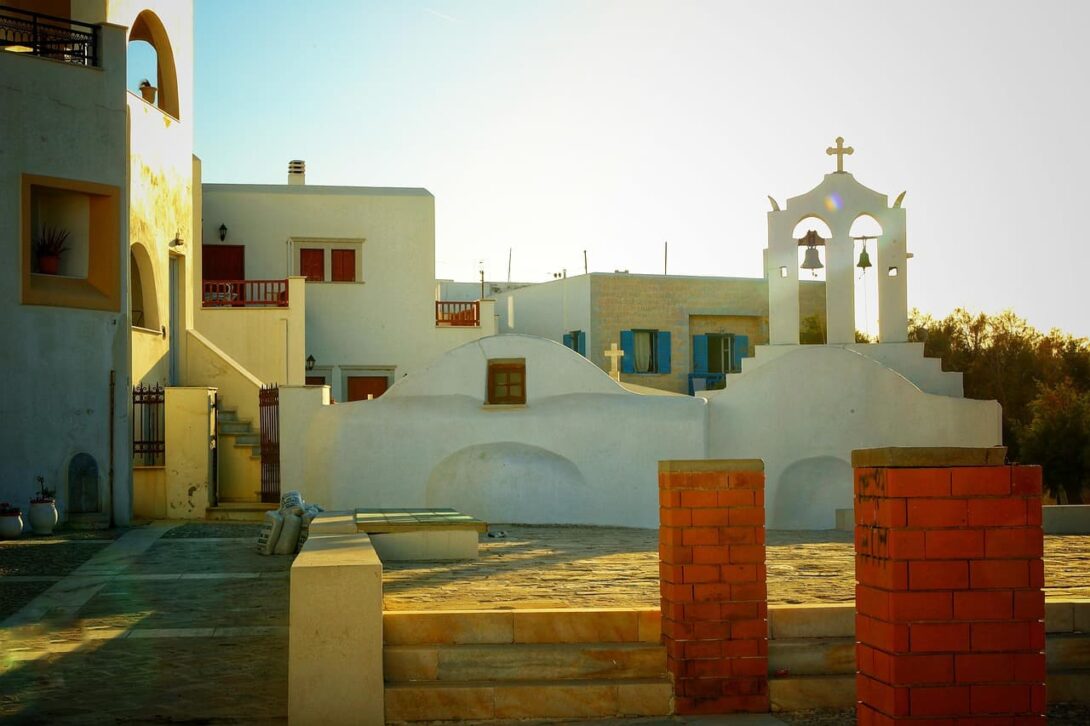
Naxos has mountain villages where tourists don’t really go. You will enjoy the spacious beaches without crowds. Main town itself feels lived-in rather than staged.
Paros is the photogenic counterpart of Naxos. It hasharbors full of fishing boats and gorgeous evening streets. Together they cover most of what people imagine when they picture the Greek islands.
The ferry between them is cheap, quick, and runs all day. Both connect to Piraeus directly. If you’ve never done a Greek island trip before and you want something reliable, this pair is it.
Milos + Sifnos
Milos will impress you with unique coastline: volcanic rock, turquoise water, caves and beaches you need a boat to reach. The whole island feels like a geology expedition.
Sifnos offers its visitors something different. Hilltop villages with local people, clay workshops, hiking paths between towns, and a food culture so specific that people plan trips around it.
This pair suits travelers who don’t need much beyond swimming, eating, walking, and sitting in a village square until late.
Syros + Tinos
Syros doesn’t empty out even in winter. People actually live here year-round, which changes everything about how the place operates. Ermoupoli has neoclassical buildings, rebetiko music bars, fancy restaurants. The vibe is closer to a small Mediterranean city than a seasonal resort.
Tinos has the religious pilgrimage side – a famous church, Greek visitors from all over the country – but outside of that, it’s marble-craft villages, hiking trails, and a quieter version of Cycladic life. Both islands deliver something harder to find elsewhere: a deep dive into ordinary Greek life.
A Week on Naxos and Paros, Day by Day
Here’s what an actual itinerary looks like, using the most popular pair:
Day 1: Fly into Athens. If your ferry leaves early the next morning, sleep somewhere near Piraeus. If you have time, grab dinner in the city. Don’t force the Acropolis on a transit day unless you actually want to.
Day 2: This day starts with the morning ferry to Naxos. The fast boats take around three hours; the slow ones stretch to five but cost less. Arrive, drop your bags and find water. The main town has a beach walkable from the port if you’re impatient. Wander the old town once the afternoon heat drops.
Day 3: Head inland. Halki has a square with trees and a distillery. Apiranthos is all marble streets and old ladies in doorways. The mountain roads are empty, the views are ridiculous, and the tavernas aren’t optimized for turnover.
Day 4: Beach day. Plaka is the long empty one. Agia Anna has more infrastructure. Check which way the wind is blowing – some beaches become unpleasant in certain conditions. Locals will tell you where to go if you ask.
Day 5: This day you will take a short ferry to Paros. Half an hour, maybe forty-five minutes. Naoussa is prettier and livelier at night. Parikia is more practical if you want port access for your last morning.
Day 6: You finally visit Lefkes – a village that hasn’t been overly polished. From here you can go to the beach in the afternoon or take a boat to Antiparos.
Day 7: Morning ferry back to Piraeus, or fly out directly from Paros if your airline offers it. Don’t book anything too early – ferries run on Greek time, and morning departures sometimes mean actual morning, sometimes don’t.
Practical stuff:
- Piraeus to Naxos: €25-45 depending on speed and season
- Naxos to Paros: €10-15, runs constantly
- Book the Athens-Naxos and Paros-Athens legs a few weeks ahead in summer; inter-island ferries are easier to get
Ferryhopper shows real-time availability and lets you book directly. Greek Travel Pages has a searchable schedule if you want to compare operators.
Timing the Trip
August is considered to be the most popular choice for the trip to Greece. You will get good sunny weather and warm water. But think about the crowds, premium prices and sold-out ferries. That’s why If you can travel another time, you probably should.
According to Lonely Planet, shoulder seasons like late spring and early autumn offer the best balance of pleasant weather, reasonable prices, and fewer tourists across the Greek islands.
Late May through mid-June: Water’s warm enough to swim with comfort, wildflowers are still around. And the best part – prices haven’t spiked yet.
September: The locals’ favorite month. Tourists thin out, the sea is at its warmest, harvest food starts appearing on menus.
Spending Less Without Suffering
The real budget lever isn’t skipping meals or sleeping in hostels. It’s not overmoving. Every ferry crossing costs money and time. Every hotel check-in costs energy. Every hour dragging a suitcase is an hour not spent doing nothing in particular, which is the actual point of going to a Greek island.
Pick a well-located room near a port or bus stop, and stay longer than feels necessary. The days where you have no plan tend to be the ones you remember three years later.