The first time I planned a trip across four countries, I opened a map, drew a rough line between the places I wanted to see, and started booking. It worked, technically, and I made it to all four. But by the second and third countries I was mostly recovering from the first, and by the last one I was just moving through it without really being present, already thinking about going home.
A few things about this kind of travel don’t come up in the standard advice. Here are the ones worth knowing before you leave
The order of your countries changes how expensive the whole trip feels
If you start somewhere cheap and end somewhere expensive, the expensive part feels brutal. If you do it the other way, the cheap part feels like a relief. The expensive part costs the same either way. Your mood about it doesn’t.
Starting in the most expensive country first is the less obvious but better strategy. Your reference point gets set high. Every country after it feels reasonable or even generous. Starting cheap and moving toward expensive means the place you saved the most money to see will feel like it’s punishing you the whole time you’re there.
I tend to over-compare before any big trip in much the same way I do with other things that feel low-commitment but still worth optimizing. When I try out a new game, for example, I’ll quickly scan comparison sites like https://beste-casinos-ohne-oasis.de/ for no-deposit bonuses, the same way I might check a few flight options before booking. It’s not a deep system, more a habit of stacking small comparisons until one option stands out enough to commit to. And that instinct carries over into travel planning more than I used to realize.
Visa sequencing is not just about whether you can enter a country. It’s about which country you entered first.
Some visas require proof that you haven’t recently visited certain other countries. Some countries won’t let you in if a particular stamp appears in your passport, regardless of when it was issued. Some require a confirmed onward ticket before they’ll admit you, which creates a specific problem if the next leg of your trip isn’t booked yet because you wanted flexibility.
The rules change often enough that checking them six months before your trip and then not checking again is a mistake. What was accurate when you started planning may not be accurate when you board.
One thing that catches people: some countries offer visa on arrival to certain nationalities, but only when arriving by air and not by land. The entry point changes the rules. A border crossing and an airport are not always equivalent, even for the same country.
Border crossing days are full days. Plan nothing else.

Most people plan an hour for a border crossing. It takes four. Queues form for no apparent reason, documents get examined longer than expected, the transport connection on the other side doesn’t run when it’s supposed to, and the terminal where you arrive is never near anything you actually want to see.
By the time you arrive somewhere new after a border crossing, you’ve used most of time you had. Planning a full afternoon of sightseeing after a crossing is how you end up standing in front of something you actually wanted to see and feeling nothing about it because you’re too tired to care.
Three days in each of six countries is not a trip. It’s a tour of check-in desks.
Three days sounds like time. But the first day you arrive and orient. The second day you watch things. The third day you pack and prepare to leave. You get one real day per country, which means you never move past the surface of any of them.
If a place genuinely interests you, it probably needs five days at minimum. If it only seems to need three, ask whether it’s on the itinerary because you actually want to go there, or because it’s geographically convenient.
The last country on your itinerary always gets shortchanged
The last position on a multi-country itinerary is a bad position. Stop giving it to the places that deserve the most from you. By the time you reach it, you’re running low on everything. Money, obviously, but also the specific patience that new places require. The last one gets whoever you are after three weeks of adapting to unfamiliar systems, unfamiliar food, and beds that are never quite right.
If there’s one country you’ve been most looking forward to, plan it second-to-last. The last slot should go to somewhere you’ve been before, or somewhere low-stakes, somewhere you can move through without much effort.
The country you think you understand is the one that surprises you most
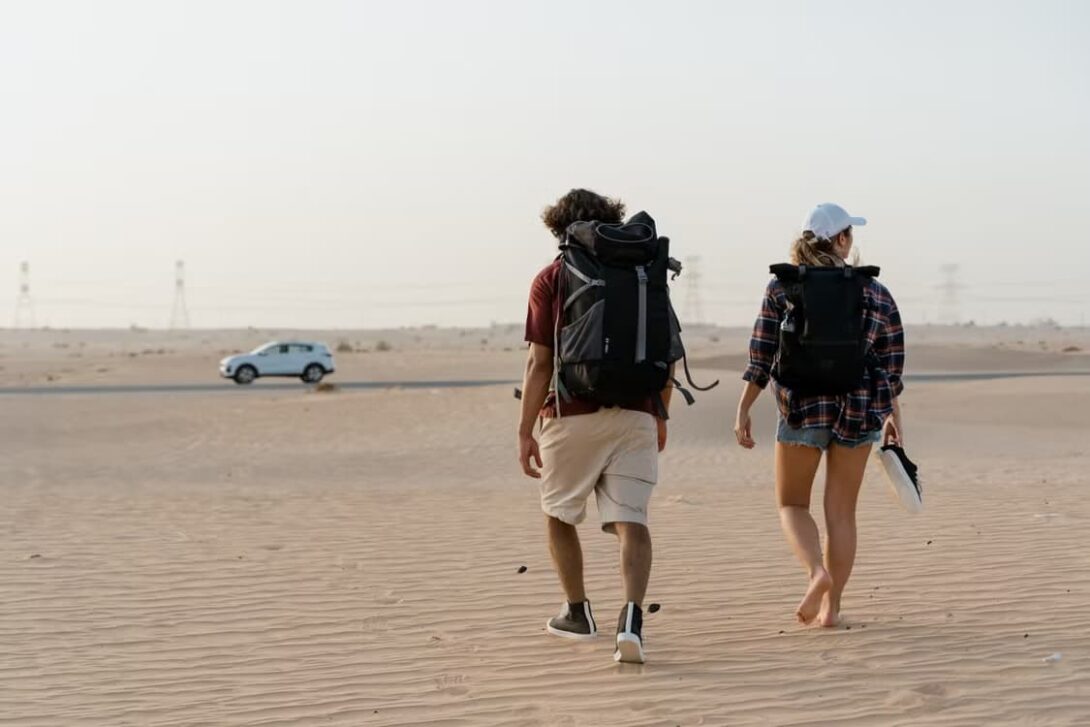
There’s usually one country on the itinerary you went into knowing a lot about. Friends had been, you’d read the books, you had a fairly detailed picture of what to expect. That one tends to be the most disorienting. The information wasn’t wrong. But a detailed mental picture means every real thing that doesn’t match it registers as a discrepancy, and you spend the trip quietly correcting your assumptions instead of just being there.
The countries you knew almost nothing about going in tend to feel easier, not because they are easier, but because you’re not comparing what you’re seeing against anything. You’re just seeing it.
Carry your research lightly. The version of a country that exists in your head before you arrive is a composite of other people’s experiences in other years. It is a starting point, not a map.
Your phone situation needs deciding before you land, not after
The options are a plan from your home carrier, a local SIM in each country, a multi-country SIM, or a combination of WiFi and downloaded offline maps. Each has trade-offs and none of them work quite as smoothly as the company selling them implies.
What matters is deciding before you leave. The airport in a new country is the worst possible place to figure this out: the prices are higher, the information is worse, and you’re already tired and potentially without signal.
One thing that applies regardless of what you choose: download offline maps for every country before you board the first flight. It costs nothing and removes a specific, unpleasant kind of panic.
Generally, multi-country trips are not harder than single-country trips. They’re different in specific ways that don’t become clear until you’re already in the middle of one. Most of the problems are solvable in advance. The ones that aren’t are usually small enough to manage when they arrive.